
Understanding small business tax in South Africa is essential for keeping costs down and staying compliant with SARS. Many entrepreneurs miss out on valuable tax incentives simply because they don’t know which system applies to them or how the qualification rules work. Choosing the right tax structure, whether Turnover Tax or Small Business Corporation (SBC) tax, can significantly reduce your tax burden and free up cash to grow your company.
This guide breaks down the most important small business tax incentives in South Africa, how they work, who qualifies, and the steps you should follow to apply for them. With the right structure, accurate records, and a clear understanding of SARS requirements, you can legally minimize your tax bill and keep your business running smoothly.
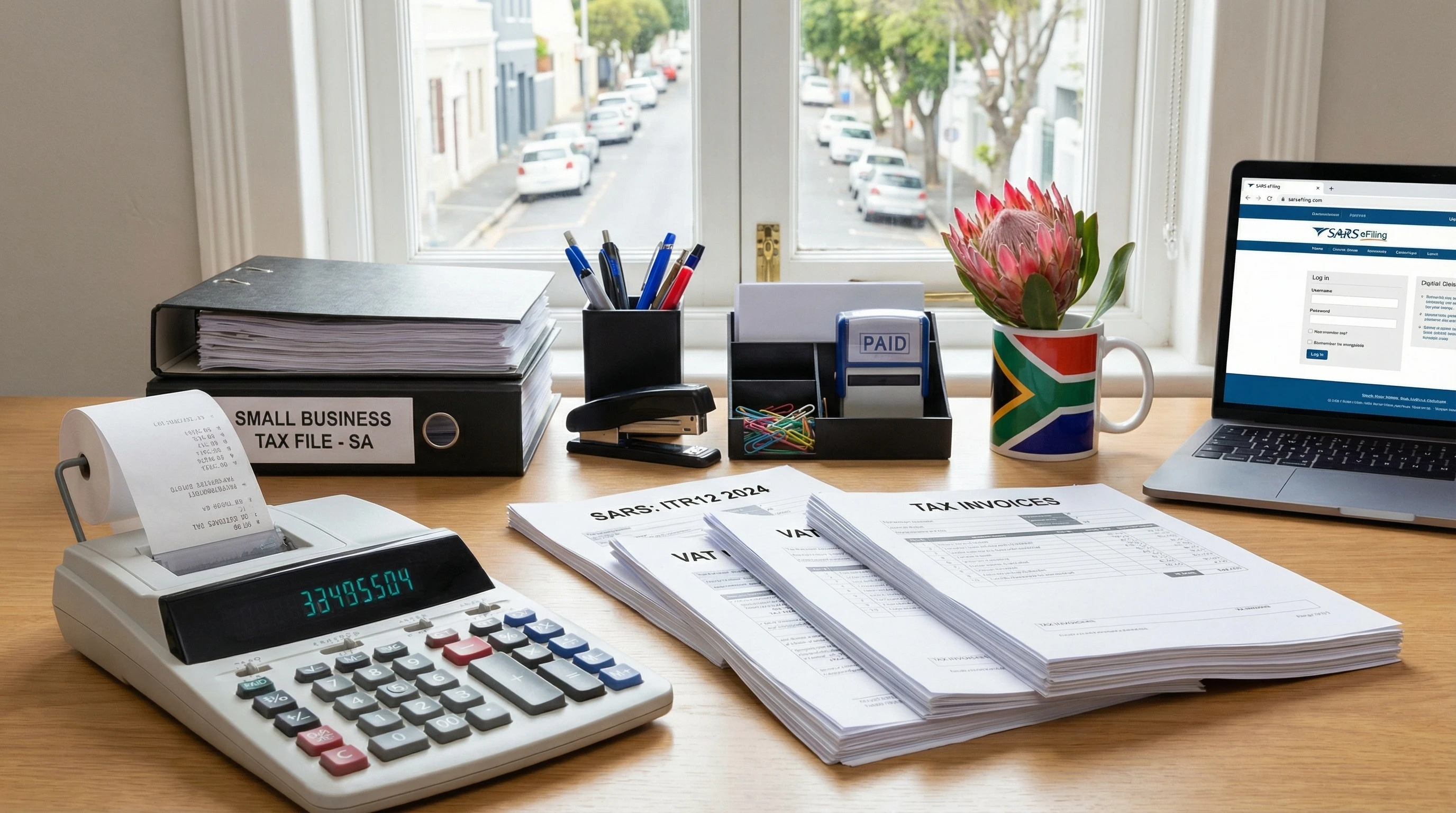
Key Tax Incentives for South African Small Businesses
Tax rules differ in South Africa based on a company’s structure, annual turnover, and business activities. Some incentives apply automatically, but others require businesses to meet certain requirements or even register separately. These specialized systems aim to support newer or smaller ventures, giving them room to grow through lower or simplified taxes.
- Understanding small business tax helps owners reduce costs and access tax incentives.
- Different tax systems apply depending on turnover and business structure.
Turnover Tax (for Microbusinesses)
Turnover Tax is aimed at micro businesses with up to R1 million annual turnover. SARS designed this tax to be simple, so owners don’t have to be burdened with complicated tax forms every year. I find this system especially practical for sole proprietors and small companies with small teams who want to spend less time on paperwork and more time running their business.
- For businesses with an annual turnover under R1 million.
- Applies to: sole proprietors, partnerships, close corporations, companies, cooperatives.
- Tax rates (SARS):
- 0 – R335 000: 0%
- R335 001 – R500 000: 1% of each rand above R335 000
- R500 001 – R750 000: R1 650 + 2% above R500 000
- R750 001 and above: R6 650 + 3% above R750 000
Small Business Corporation (SBC) Tax
If you have a registered company in South Africa and you’re running a genuine small business, SBC status offers some great tax savings. The SBC regime reduces the burden for fast-growing startups or established microenterprises that don’t want to pay the full corporate tax rate.
- For registered companies that meet the qualifying criteria.
- Offers reduced tax and added incentives.
- Tax rates:
- R1 – R91 250: 0%
- R91 251 – R365 000: 7% above R91 250
- R365 001 – R550 000: R19 163 + 21% above R365 000
- Above R550 000: R58 013 + 28% above R550 000
SBC Qualification Requirements
If you want to benefit from SBC tax rates, your business must meet the qualifying criteria. From personal experience, the qualification guidelines can be strict, so it’s good to double-check them before filing as an SBC.
- Turnover under R20 million per year.
- All shareholders must be natural persons (real people, not companies or trusts).
- The owner must operate only one business (not juggling multiple unrelated companies).
- Less than 20% of turnover from investment income.
- Less than 20% from personal services (for example, consulting work where you or your employees provide the main service).
Microbusiness (Turnover Tax) Qualification
There are qualifying criteria for who can sign up for the Turnover Tax system. These were set up to prevent larger or more complex companies from accessing microbusiness tax breaks.
- Turnover below R1 million per year.
- Must not be a personal service provider or labour broker.
- Can operate as: sole proprietor, partnership, close corporation, cooperative, or company.
- All partners must be individuals (not companies, trusts, or other businesses).
- Not allowed if the business is: a Public Benefit Organisation (PBO), recreational club, association of persons, or funding entity.
- Owner, partners, or shareholders cannot have shares or interests in other companies, close corporations, or cooperatives.
| Feature | Turnover Tax (Microbusinesses) | Small Business Corporation Tax (SBC) |
|---|---|---|
| Annual turnover limit | Up to R1 million | Up to R20 million |
| Applies to | Sole proprietors, partnerships, CCs, companies, cooperatives | Registered private companies only |
| Tax-free threshold | 0% under R335 000 turnover | 0% under R70 700 profit |
| Tax calculation | Tax based on turnover | Tax based on taxable profit |
| Complexity | Very simple (fewer forms) | Moderate (regular tax return + SBC section) |
| Shareholder restrictions | All partners/shareholders must be individuals | All shareholders must be natural persons |
| Operating multiple businesses | Not allowed | Not allowed |
| Ideal for | Microbusinesses wanting admin simplicity | Fast-growing small companies aiming to reduce corporate tax |
Tax Exemptions for Small Businesses
Both the SBC and Turnover Tax systems allow certain businesses to pay no tax if their income or profit is low enough. I think this feature gives micro-entrepreneurs extra breathing room in their early years, since taxes only start kicking in past a certain amount.
- SBCs pay no income tax if profit is under R70 700 per year.
- Microbusinesses pay no turnover tax if turnover is under R335 000 per year.
Small Business Tax Benefits
There are extra perks for small businesses that claim either Turnover Tax or SBC status. These special rules help reduce their overall tax bill:
- Faster asset depreciation, therefore reducing your profit, resulting in lower tax (Check the full SARS rulebook for details.)
- Tax planning options: SBC shareholders can take a combination of salary and dividends to optimize personal tax. This combination often lowers the effective income tax individual owners have to pay.
Deductible Expenses for Small Businesses
Keeping track of real business costs is not just good for operations; it also reduces how much tax you owe. SARS allows small businesses to deduct a range of everyday expenses. Here are some examples:
- Operating costs: rent, utilities, phone and internet, subscriptions, and bank fees.
- Equipment costs: computers, machinery, vehicles, repairs, and supplies.
- Education and training: on-the-job skills development, external courses, or industry-specific upskilling.
- Entertainment (business-related): meals, client functions, business meetings.
- Startup expenses: Some pre-trading costs qualify as deductions once you start earning income.
- Net operating losses: if your business incurs a loss, you can usually carry this forward to offset against profits in future tax years.
Practical Steps For Applying Tax Incentives
The paperwork for both Turnover Tax and SBC can feel like a headache, but my experience is that with the right information, applying gets much simpler. Here are the basics that I follow or recommend to clients:
- Register with SARS: Ask an accountant, use eFiling, or visit your nearest SARS branch. Registration for section 12E (SBC) is part of your company tax return. To register your business for Turnover Tax, you need to submit a TT01 form to SARS. The registration for Turnover Tax is a manual process, and the registration must be done by SARS appointment and cannot be done on eFiling
- Check your eligibility each year: SARS can amend requirements, so a yearly check keeps you safe and prevents penalties for accidental noncompliance.
- Keep clear financial records: All income, expenses, and asset purchases must be easily tracked. This makes annual tax returns and incentive claims simple and uncomplicated.
Extra Tips for Managing Small Business Tax in South Africa
I have found that a few small changes in how you approach your bookkeeping and software can make a big difference in staying organized and compliant.
- Utilise digital POS and accounting software (like Xero, QuickBooks, or Sage) to automate record keeping. It saves me a lot of time and avoids missed deductions.
- Schedule regular consults with a tax advisor, at least twice a year, so you can make the most of any new incentives or rule changes.
- Keep all supporting documents, even for small expenses, since SARS can ask for proof when checking claims or paying out refunds.
Frequently Asked Questions About Small Business Tax Incentives
I get a lot of questions about small business taxes in South Africa, especially on practical steps for claiming incentives and avoiding common mistakes. Here’s a round-up of the main areas:
Question: Can my sole proprietorship qualify for SBC?
Answer: No. SBC is meant for registered companies. Sole proprietors and partnerships should consider Turnover Tax eligibility.
Question: What if I earn a lot one year, then less the next?
Answer: Always check if you qualify for incentives each year; your eligibility can fluctuate depending on your annual turnover, ownership, or income mix. If your business exceeds the incentive threshold, report this to SARS as soon as possible.
Question: Can I claim home office deductions as a small business?
Answer: Yes, but you need to follow SARS guidelines closely and apportion costs based on floor space and use for business versus personal activities.
Question: Do tax incentives apply to VAT?
Answer: The incentives outlined here mainly affect income tax, not VAT. Some reporting requirements overlap, so talk to your VAT advisor or SARS about your specific situation.
Final Notes for South African Small Business Owners
Making sense of tax incentives is a real advantage for small business owners. From what I’ve seen, having accurate records and picking the right business structure straight away really helps as you go along. Good accounting software or a trusted advisor can reduce much of the pressure during tax season, keeping you open to incentives and tax savings as your business continues to grow. Stay proactive, keep learning about new opportunities, and you’ll be ready to make the most of your tax situation as a South African small business owner.

The information on this website is for general informational purposes only and does not constitute financial, legal, or other professional advice. We do not guarantee the accuracy, completeness, or suitability of any information provided. safricanloans.com and its employees shall not be liable for any loss, damage, or expense arising from the use of or reliance on the information contained herein. Visitors are encouraged to seek independent professional advice before making any financial decisions. This website is governed by the laws of the Republic of South Africa.
Related Reading: How to Prepare a Successful Small Business Funding Application in South Africa (2026 Guide)