Managing multiple loans in South Africa can steadily undermine your budget, especially when credit cards, store accounts, and personal loans all come with different interest rates and payment dates. A consolidation loan offers relief by rolling those debts into one monthly repayment, often at a lower interest rate.
But here’s the catch: while consolidation can reduce your instalment, it doesn’t always save you money. In some instances, it can cost thousands of rands more over time.
In this practical guide, I explain how consolidation loans in South Africa really work, when they make financial sense, and when they work against you. You’ll learn how lenders assess applications, which debts you can consolidate, and how to decide, using real numbers, whether consolidation is the right move for you.
What Is a Consolidation Loan?
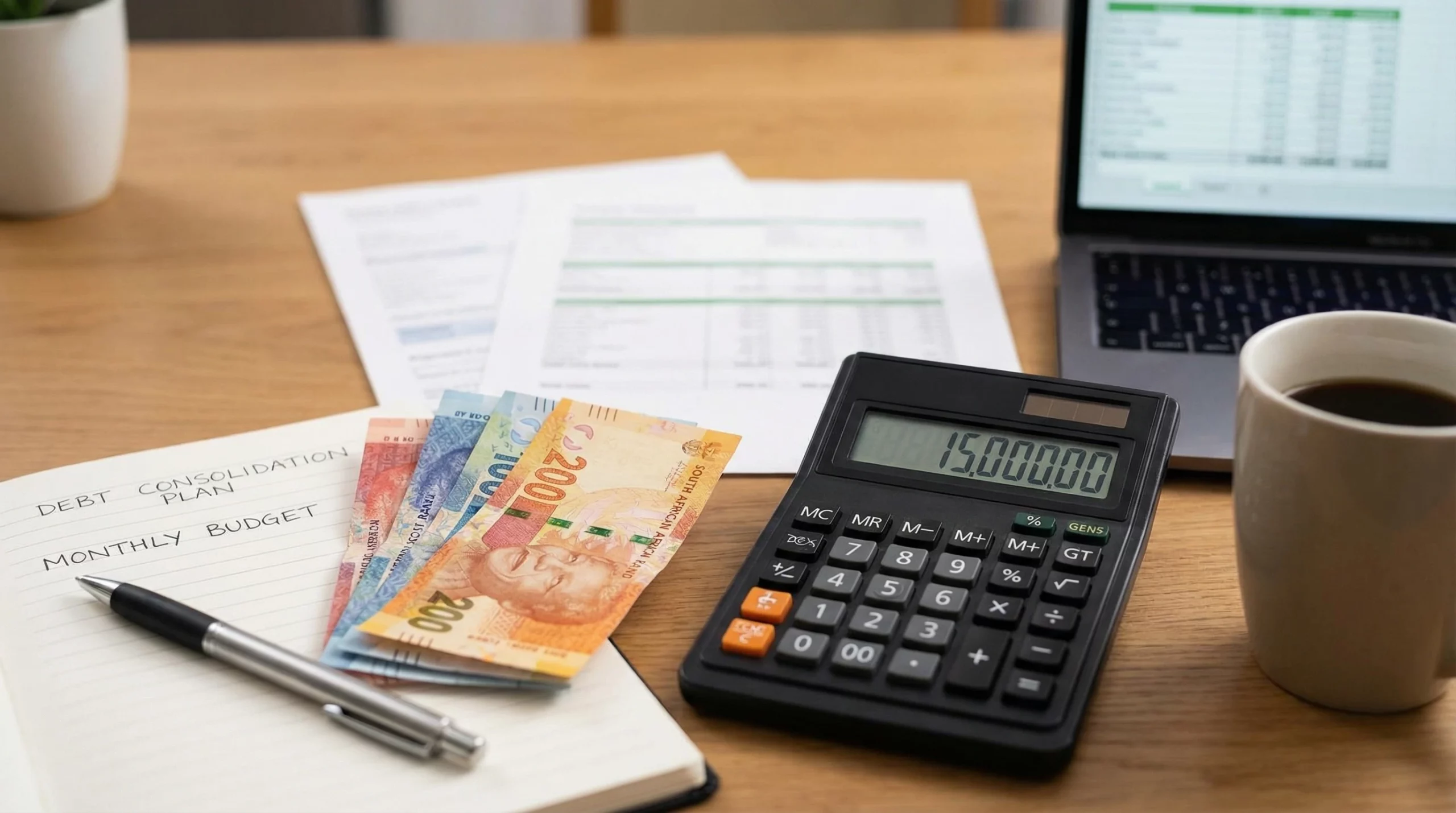
South African loan consolidation explained in simple terms: consolidation means combining multiple existing credit agreements into a single new loan. Instead of paying off personal loans, credit cards, and retail accounts separately, the new lender pays them all for you. You’re left with one loan and one monthly repayment, usually at a lower fixed interest rate if your credit record allows it.
The main aim of consolidation loans is to make managing debt a little easier and, if you qualify, more affordable every month. If your new loan offers a reduced interest rate compared to those older debts, you’ll pay less in interest overall, which feels great. Even if the monthly instalments drop, it’s worth checking if you’re saving money over the full term.
How Does Loan Consolidation Work?
When you apply for a consolidation loan in South Africa, the lender does a quick calculation. They add up all your current debts, like:
- Credit and store card balances
- Personal loans from banks or microlenders
- Retail or vehicle finance that is still due
The lender then settles each of those individually, meaning you no longer owe the old creditors anything. Instead, you start a new loan for the combined amount. Some lenders even let you add a little extra to access cash for emergencies, although this increases your total debt owed.
I’ve noticed that the most common debts people roll into consolidation loans are credit and store cards. These often have interest rates far higher than those attached to personal loans. By merging your debts into a single loan at a lower rate, you might cut your monthly instalment and free up some cash each month. It can definitely make budgeting easier.
Another often overlooked benefit is simplifying your financial planning. Tracking multiple due dates and payment schedules can be confusing, and missed payments can happen more easily. After approval for a consolidation loan, you have one payment date and amount. This helps with budgeting and avoiding any potential late fees. For individuals seeking to improve their credit score, this streamlined payment setup can make a big difference over time.
Why Do People Choose Loan Consolidation
I often see people choosing loan consolidation to achieve some of the following goals:
- Convenience. Managing one payment instead of several saves time and reduces stress.
- Savings on interest. If you get a lower rate, you benefit by paying less interest over time.
- Improved cash flow. More money could be available each month for living expenses or to build up savings, especially if your consolidated payment is smaller.
- Chance to borrow extra. You may be able to increase your loan to cover a planned expense, although this will result in a higher final repayment amount.
It’s essential to look at the long-term impact. Lower monthly instalments may feel like a relief, but paying over a longer period can add up, with more interest accrued over the years.
Why The Numbers Matter
Focusing solely on the monthly repayment may lead to overlooking the higher cost. If you increase your repayment period, you could actually end up paying much more overall interest, even with a lower rate. Here’s a simple example based on typical South African debts:
- Original Deal: R20,000 owed on various loans at an average of 20% interest, repaid over 3 years = total repayment about R31,500 (monthly repayment: approximately R870).
- With Loan Consolidation: R20,000 consolidated at 18% over 5 years = total repayment about R37,000 (monthly repayment: approximately R620).
Saving about R250 per month feels good, but over five years, you’d pay over R6,000 more compared to the shorter term. I always check the total repayment when I compare loan offers, not just the monthly amount.
Example Comparison of Consolidation vs Multiple Loans (illustrative)
| Scenario | Multiple Loans (Before) | Consolidation Loan (After) |
|---|---|---|
| Total debt | R20,000 | R20,000 |
| Interest rate | ±20% average | 18% fixed |
| Loan term | 3 years | 5 years |
| Monthly repayment | ±R870 | ±R620 |
| Total repayment | ±R31,500 | ±R37,000 |
| Number of payments | Multiple | One |
| Budgeting difficulty | High | Low |
Choosing The Right Loan Term
Consolidation loans are offered over several years, usually between 3 to 5 years, and sometimes even longer. A longer loan term reduces your monthly repayment, which may look attractive on a tighter budget. The trade-off is that you end up paying interest for a longer period, which increases your total cost.
If your primary goal is to clear debt and save on interest, it helps to choose the shortest loan term you can afford. Alternatively, keep the same repayment amount as your old debts.
Many lenders will try to tempt you with the lowest possible monthly instalment. While this sounds great in the short term, don’t lose sight of the bigger picture. Sticking to a shorter term or paying extra each month can really shrink the final amount you pay.
How To Reduce Your Interest Costs
Just because your new minimum payment is lower, it doesn’t mean you have to stick to it. Two options can really help:
- Keep paying the same total you used to spend across all your old debts. Any extra payment above the minimum shortens your repayment period and reduces the interest.
- Ask the lender to set your monthly instalment so that the consolidation loan clears in the same period as your previous loans, like 3 years instead of 5.
In the example above, if you repay the consolidation loan over 3 years instead of 5, you could pay nearly R1,000 less than if you paid the minimum new instalment.
How South African Lending Laws Affect Consolidation Loans
If you’re considering consolidating your debts, the National Credit Act (NCA) ensures that the credit providers involved conduct thorough checks before offering such services. The NCA heavily regulates consolidation loans by mandating fair practices, affordability assessments, unambiguous contracts, consumer protection and preventing reckless lending.
Are You a Good Candidate for a Consolidation Loan?
I’ve noticed most banks and lenders look for certain things when approving consolidation loans:
- A regular income, usually proven with payslips or bank statements
- Good credit history, no missed payments or recent defaults
- Existing debts that aren’t already in legal collections
- Debts that are not already under a formal debt review process
If your credit record is strong and your income covers the new repayment, you stand a good chance. If your debts are already overwhelming and you’re in default, consolidation may not be an option, and speaking to a registered debt counsellor could be more helpful.
If your credit record isn’t strong enough, you may need to explore alternatives such as bad credit loans, although these often come with higher interest rates and stricter terms.
Checklist Before You Apply
I always go through these checks to make sure consolidation is the right move for me:
- Get settlement figures for all my existing loans and store accounts, so I understand the real cost
- Ask for a quote and compare the total repayment, not just the monthly cost
- Look out for added service fees or compulsory credit life insurance premiums that increase the total loan cost
- Check if you are liable for early settlement fees for existing loans.
Questions to Ask Your Lender
- Is the interest fixed or variable?
- Can I pay higher instalments each month without penalty?
- What happens if I miss a payment?
- Does the loan include all fees and insurance in the quote?
It’s also a great idea to read reviews about your chosen lender and check with South Africa’s National Credit Regulator. This gives you peace of mind that you’re working with a trusted provider who will not surprise you with extra fees or dodgy advice down the line.
Real-Life Benefits and Challenges
I’ve seen consolidation loans help people regain control over their finances, especially when debt gets hard to manage. Consolidation can eliminate multiple payment dates and lower your risk of accidentally missing payments, which helps protect your credit record.
It’s not a magic fix, though. If you use your store or credit cards again after consolidating, or if you borrow extra without a clear plan, you can end up with even more debt. The best outcomes usually happen when you avoid racking up more debt and keep spending under control while you pay off the consolidation loan.
Some people also find that once they have cleared out all those old loan accounts and switched to a single payment, their sense of control and confidence with money improves. It can feel less overwhelming, giving you the breathing space you need to focus on saving, investing, or building a solid emergency fund for the future.
Frequently Asked Questions
Question: Is a consolidation loan the same as debt review?
Answer: No, consolidation is a new personal loan that replaces old debts. It doesn’t involve court orders or formal debt counselling processes. Debt review is a regulated solution if you’re struggling to afford even basic repayments and require legal protection from creditors.
Question: Will I save money with a consolidation loan?
Answer: You may save if you qualify for a much lower interest rate and keep your repayment term the same or shorter. If you extend your loan term to lower the instalment, you might pay more interest over time.
Question: What debts can I consolidate?
Answer: You can usually include store cards, credit cards, bank loans, and personal loans. Home loans and certain vehicle finance agreements aren’t usually eligible unless you refinance through a specialist loan product.
Question: Does debt consolidation affect my credit score in South Africa?
Answer: Applying for a new consolidation loan triggers a hard enquiry, temporarily lowering your score because you are taking on more debt. Your score will recover if you maintain your loan repayment schedule.
Takeaway for South Africans
South Africa loan consolidation explained simply. It’s one loan to pay off your existing debts, so you only have one monthly payment to budget for. I’ve found it helpful for staying organised and, in some cases, saving on interest. Ensure you compare the full costs, keep spending habits in check, and use the opportunity to get ahead financially, rather than adding more debt. For anyone looking to simplify their finances, this can be a solid step to getting back on track.

The information on this website is for general informational purposes only and does not constitute financial, legal, or other professional advice. We do not guarantee the accuracy, completeness, or suitability of any information provided. safricanloans.com and its employees shall not be liable for any loss, damage, or expense arising from the use of or reliance on the information contained herein. Visitors are encouraged to seek independent professional advice before making any financial decisions. This website is governed by the laws of the Republic of South Africa.